The Hype
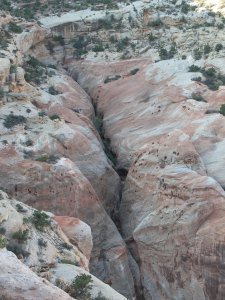
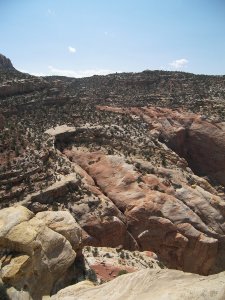
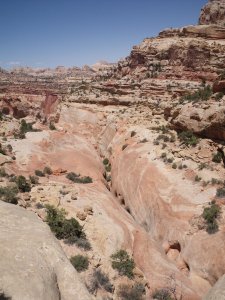
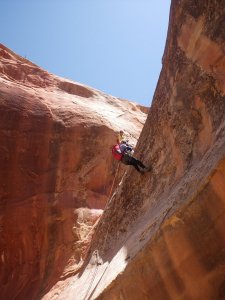
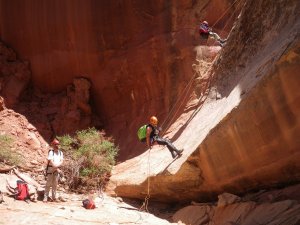
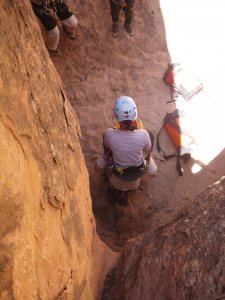
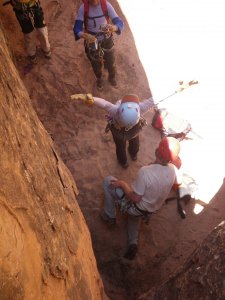
Set among soaring Wingate walls under a sky-scape of white capped Navajo sandstone domes, the three east forks of Shinob provide some of the best scenery in the park. Most forks can easily be done in a half day, providing the opportunity to combine canyons and hikes, and tailor the day’s adventure. Each fork has a distinctly different flavor with opportunity for the canyoneer to practice a variety of skill sets. Drop into the southernmost fork, Nighthawk, to practice partner assists, captures, bag drags, retrievable anchors and other techniques for navigating a canyon with numerous short shallow pothole drops. Top off the experience in Nighthawk with an awkward start rappel where the anchor must be extended for a smooth rope pull (and to reach the ground)!
Getting There
Access Road
Access is via the paved scenic drive, and the gravel/dirt Grand Wash road. The Grand Wash road is accessible to passenger cars under most conditions. The park may close this road when flash floods are threatening.
To get there, turn onto the scenic drive at the visitor center. Head south for approximately 3.4 miles to the Grand Wash turnoff. Drive East on the Grand Wash road for approximately 1.3 miles to the parking area for Grand Wash and Cassidy Arch. There is an outhouse at the trailhead.
From the Trailhead
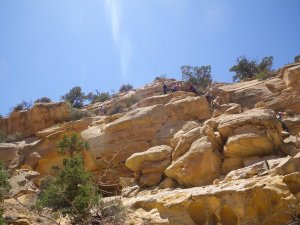
Look past the Cassidy Arch trailhead sign and note a drainage pouring into Grand Wash across the way. This is Bear Canyon. Your goal is to cross Bear Canyon from the north and climb to a nice ledge system on the south side of Grand Wash, which will take you around the heads of the three forks of Shinob, and up Fern’s Nipple if you wish to combine your canyon with a rewarding peak hike. From the trailhead start hiking up Grand Wash, taking not of the slanting ledge systems to your right (East). The first step is to get on a mid-to-high level ledge. The route is well cairned. At the first opportunity cross Bear Canyon and follow the cairned route through a series of ledges. When you arrive at a relatively very wide pink and white sandstone ledge layer begin contouring along this ledge to the south, admiring the view of Cassidy Arch (and canyon) to the NW as you go. The first canyon system you encounter is Na-gah canyon. The third canyon you encounter is Nighthawk Canyon. Find your way into the canyon bottom and you will soon encounter the first drop. Some of the early drops in the canyon are by-passable, but please tread lightly if you choose to find a way around these early raps. If you choose to rappel, please set your anchor to avoid rope pull grooves.
The Canyon
Rated 4 for the awkward start on the 200 ft rappel. The awkward start is required to ensure that the rope reaches the ground.
Skills required
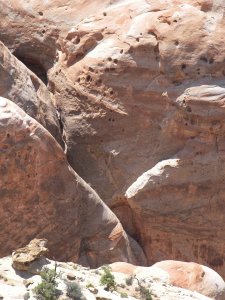
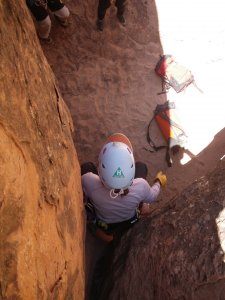
This is a great place to practice techniques for entering and exiting potholes. Skills used may include problem solving, retrievable anchors, partner assists and captures, bag drabs, sandtraps, potshot anchors, and more. The longest rappel is a full 200 ft–with the anchor extended. The last person in the group must do an awkward start with the anchor extended beyond the edge to ensure that the rope reaches the ground and that the rope pull is easy. This is a great skill to have, and a great place to practice it!
Rappels
Many drops can be bypassed in the upper canyon, and a number of the drops in the lower section may be down-climbable and partner assist-able, so the number of rappels will vary; approximately 5-10.
Additional Risk
If the potholes are holding water there may be an elevated challenge for the group in problem solving how to establish anchors and/or utilize other techniques for the numerous pothole drops.
Water
A lot of the potholes could hold water, though most are probably not likely to be swimmers in all but the wettest conditions. Additional layers of warm clothing are advised (fleece); however, wetsuits are probably not necessary except in the wettest and/or coldest conditions. This could change if the canyon gets scoured.
Anchor Conditions
Capitol Reef’s rules regarding anchors are as follows:
- Installation of new bolts is prohibited.
- Replacing existing unsafe bolts is allowed.
- The use of power drills is prohibited.
- Where necessary to leave or replace webbing the webbing should closely match the color of the surrounding rock.
This is primarily a natural anchor canyon with a number of short drops out of potholes. Most are partner assist-able, and those that are not should lend well to retrievable pothole anchoring technique in most conditions. The last drop (below where Nighthawk Fork joins with Timpie Fork of Shinob) used to have an old piton in the crack, which has recently been replaced by a bolt. Please do not place new bolts in this canyon, as it could compromise future access to the canyons in Capitol Reef. In the places in the canyon where there are no bolts there are plenty of natural anchor possibilities.
Gear Recommendations
Gear for rappels up to 200 ft, retrievable and pothole anchor gear, helmet, harness, rappel device, slings, 50 feet of webbing, and 3-4 rapides. Body armor is not necessary, but may be appreciated by beginner down climbers. Pack size is not a concern. Bring extra layers if conditions are wet.
Flash Flood Danger
Low. If flash floods are expected in the area the road to the Grand Wash trailhead may be closed and/or impassable.
The Exit
After the last rappel, walk to the end of the canyon and turn right (north) into the main fork of Shinob. Head toward the Grand Wash road, then turn right (East) on the road. The trailhead is approximately ¼ mile.
Red Tape
Access
Up to date access information, including a single page printable access and emergency information card is available here: http://www.americancanyoneers.org/access-capitol-reef/
Permits
A permit is not required for canyoneering in Capitol Reef at this time.
Group size Limits
Groups are limited to 6 people on backcountry routes (including canyoneering routes) in Capitol Reef, with the exception of Cassidy Canyon, Old School Canyon, and The Wives, which are limited to 12 people.
Entrance Fee
The Scenic drive is the only area of Capitol Reef where an entry fee or park pass is required. Passes can be attained at the visitor center or at a self-pay kiosk at the start of the scenic drive. Fees are good for seven days and are as follows:
- Individual on foot or bicycle: $7.00 (the fee was increased on June 1, 2015)
- Motorcycle or private vehicle: $10.00 (the fee was increased on June 1, 2015)
- Capitol Reef National Park Annual Pass: $30.00, available at the visitor center
- Federal Interagency Annual Pass: $80.00, available at the visitor center