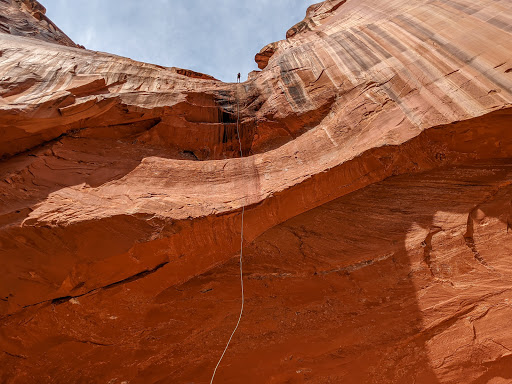
I had heard about a promising new canyon in Capitol Reef called Aperture, that was later published under the name of A-Door-Able Canyon. It looked like a lot of mileage for not very much canyon, so I had put off doing it for quite a while. However, I found what looked like an upper extension to the canyon, which was enough for me to get after it. Leaving the Chimney Rock Trailhead at 8:30am, we reached the canyon floor in 3 hours. The beta only describes the lower canyon, which is separated from the upper by a bit of wash walking, so we hiked to the top of the upper to see if it was a worthwhile add-on. In the upper section we found a few down-climbs and a final series of filled potholes that we were able to link together with a 200ft+ rappel off a small natural arch on the RDC. While this section was very short, I’d say it’s probably worth adding-on for anyone doing the canyon since you’ve already hiked all the way out there.
The lower canyon is much deeper than the upper, and certainly where all the goods are at. After downclimbing near the head, we full-body bridged over a semi-keeper pothole with about waist deep water in it, and started setting up for a rappel right after. We did this rappel using a sandtrap, but a waterpocket could’ve also been used, though you’d need one or the other due to the nature of the spot.
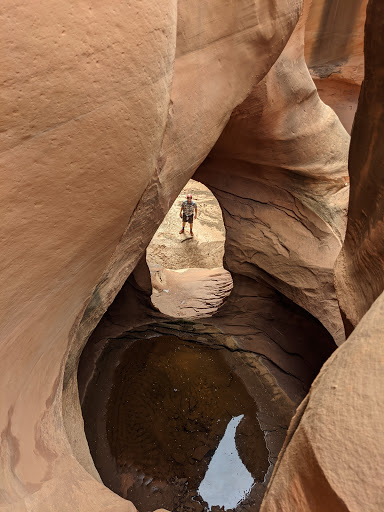
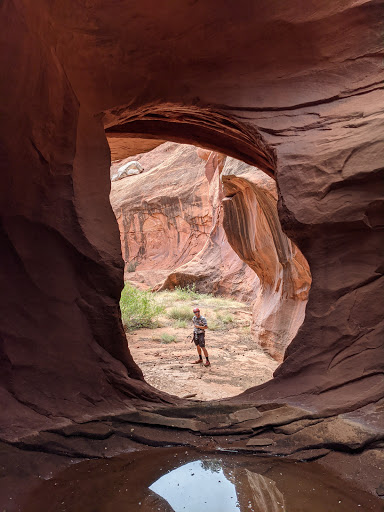
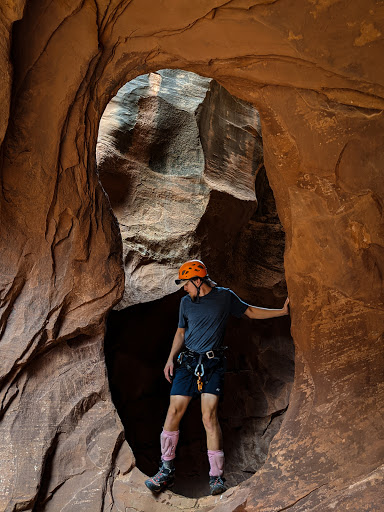
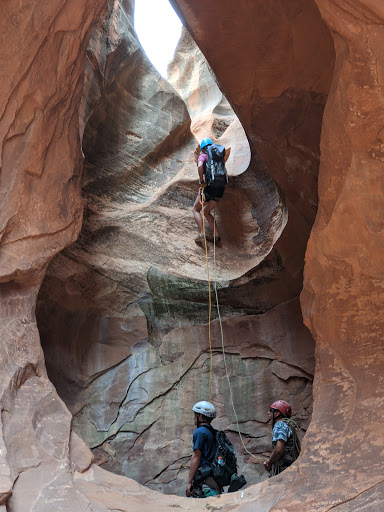
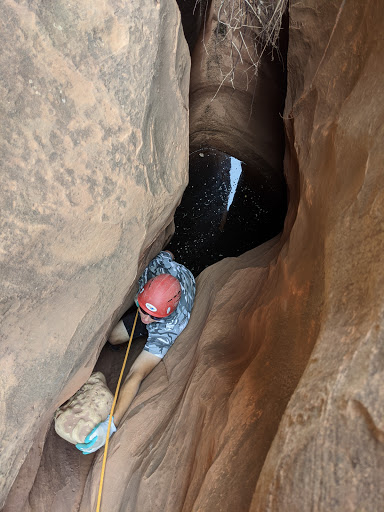
The rappel deposits you in the bottom of a pothole over 20 feet deep, that is blown out at the bottom, which is no-doubt where the name A-Door-Able comes from. This feature was one of the most unique features I’ve seen in a canyon, and is definitely worth seeing.
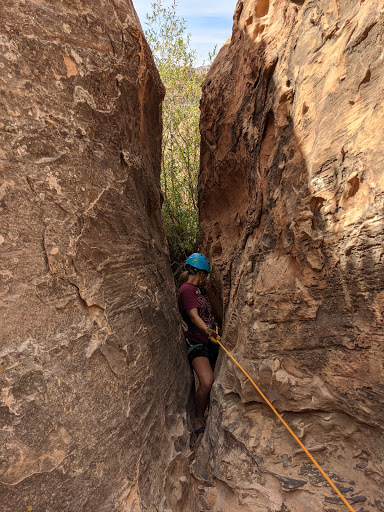
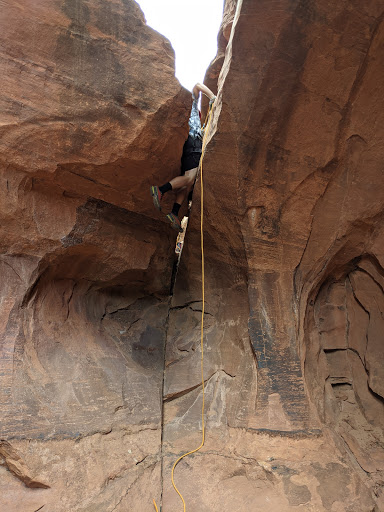
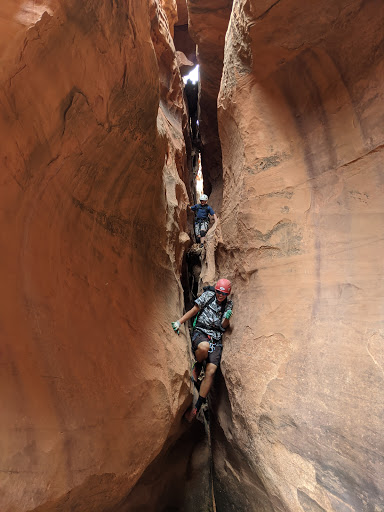
The next obstacle was a short and horrendous drop through a tight, overhanging crack that couldn’t be downclimbed, that we conquered through a not so graceful partner assist. Anyone with a hefty chest might really struggle getting through this obstacle safely.
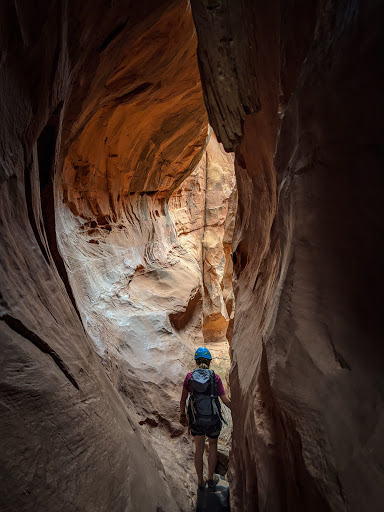
Next we encountered an interesting cathedral-like hallway, followed by a few short downclimbs. This led to a drop into a deep pothole that we partner-assisted and walked out of due positive angles on the exit side.
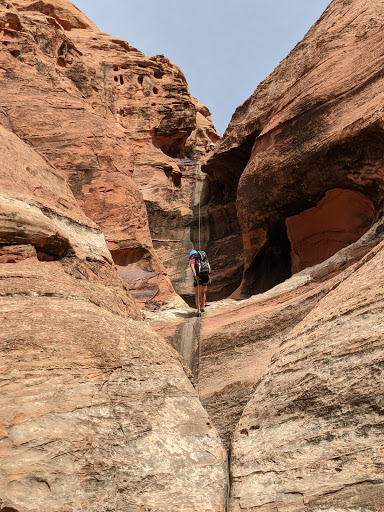
A short rappel off a log led to the final stretch of the canyon, which looks over the almost 300 foot final rappel. We replaced the deadman anchor that was there and descended the final incredible rappel with a good amount of free-hang time. The landing was in a cottonwood grove with a flowing spring, situated in the high-walled Spring Canyon. The final rappel is the icing on the cake of a short, but worthwhile canyon.
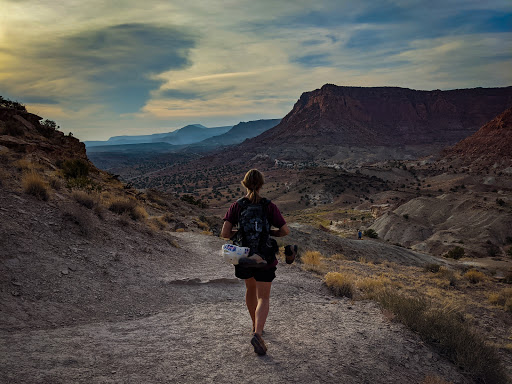
We took our time in the canyon, with it taking us 4.5 hours to descend from the top of the upper section out the bottom of the lower. The hike out of Spring Canyon back to Chimney Rock was mostly level, and quite scenic, which makes the distance required for this canyon a lot easier. In total, we traveled 11 miles, with about 1700 feet of elevation gain, in about 9.5 hours car to car. Overall, I enjoyed the canyon more than its neighbor, Pandora’s Box, though it is much shorter. It is a great canyon for those who don’t mind a hike, and are looking for some natural anchor challenges in a very scenic canyon.
John Diener
Thanks for the upper canyon info, would like to get up there and check it out sometime. If doing the upper, I recommend hiking the last little bit to the ridge, where the views are astounding (and perhaps you did so).
-john
ratagonia
Another source indicated that getting an anchor for the final rappel could be very challenging in some conditions.
Tom
Ram
When wet I heard (?) a water anchor is necessary. Those that knew of the place for years know this. The publisher found it dry, I heard. Hoping this dry year does not lead some to trouble, in future conditions. (note: walls often show where water heights often are, even in dry conditions) It is not just how you find it. It is all the looks a place can have. In this scenario, our name for it is “water holding capacity” and it is noted for future trip planning, to the same locations. This can and does impact anchoring and thermal protection needs.
Austin Farnworth
I heard of the sticks being used in wet conditions as an anchor, but no guarantee they will be there forever. The waterpocket option for the final rappel definitely requires some careful rigging in wet conditions due to the high risk of getting it stuck on the pull. In low water conditions like we had, you could get away with only using a fiddlestick in the canyon, though we made sure to bring a waterpocket. After seeing how much water holding potential the canyon has, it makes me want to go back and hit it in full water conditions, with the exception of dealing with the last rappel.
Sent from my Pixel 4 using Tapatalk
Austin Farnworth
There is an open area with quite a bit of rocks right before the final sequence. We ferried a bunch of rocks down, before realizing there was plenty at the anchor to work with. In a worst case scenario, you could climb back up to the open and rocky area with a couple partner assists to gather rocks, though it would be time consuming for sure. The long v-shaped crack after the final pothole makes it a poor candidate for a sandtrap or waterpocket, but I know that the final drop was originally done by fiddling off some sticks wedged against the v-slot constriction.
Sent from my Pixel 4 using Tapatalk
Kuenn
Nice report, thanks for sharing! Beautiful and scenic!!
Considering the “awkward” rappel. Looking back would you have tried something “less” awkward or do you think your method was the best?
Austin Farnworth
A partner capture is likely the best option, since we were able to easily get the last person down. The first few who rappel could get an assist from someone stemming above to help them lover through constriction without swinging into the wall under the overhang.
Sent from my Pixel 4 using Tapatalk