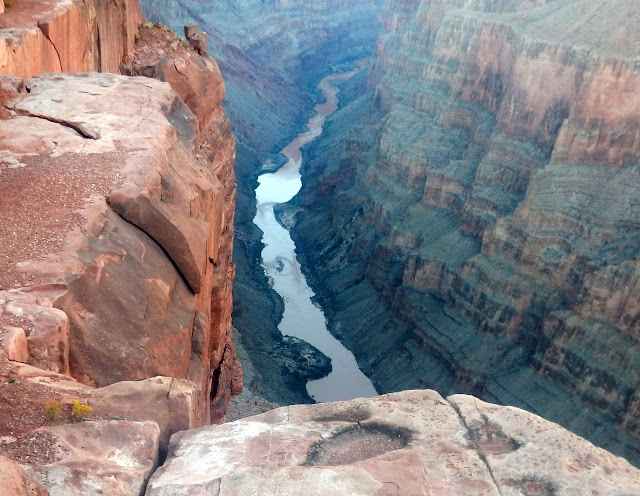
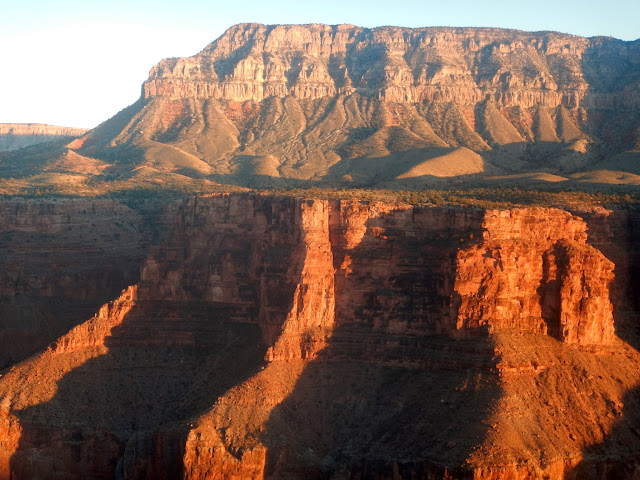
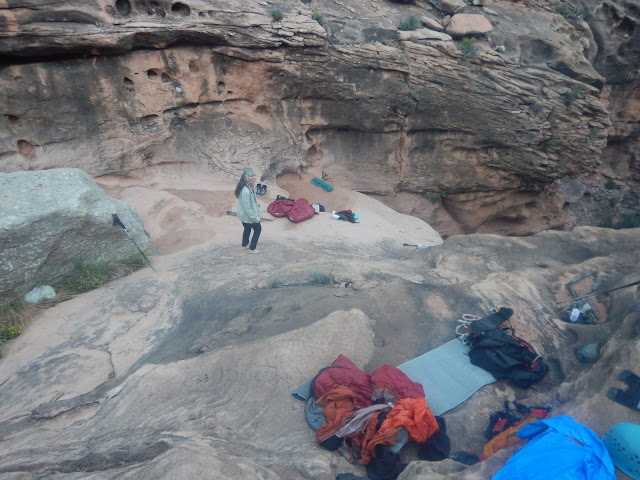
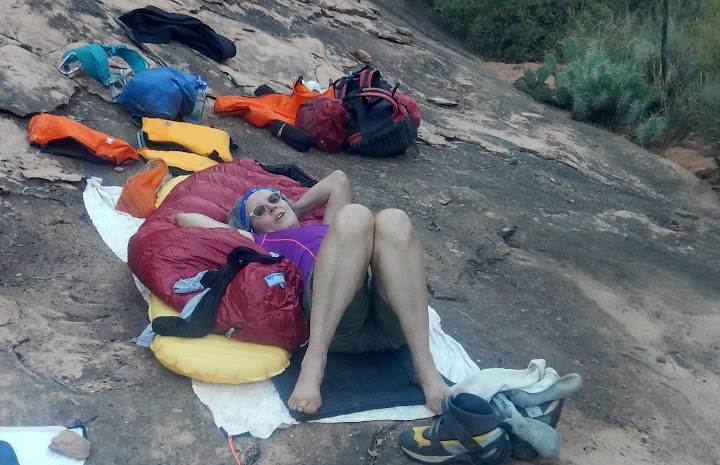
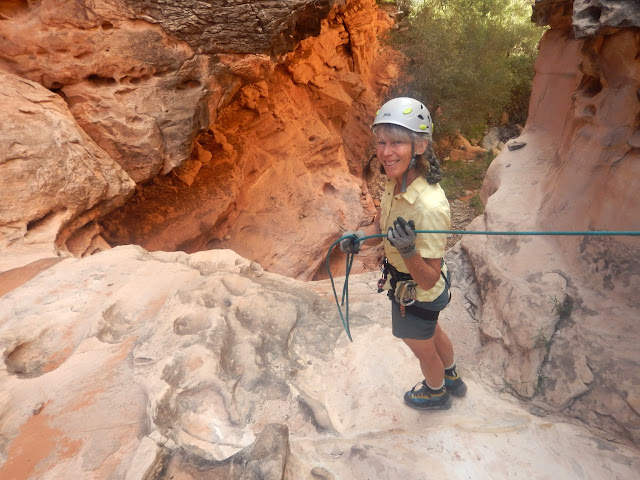
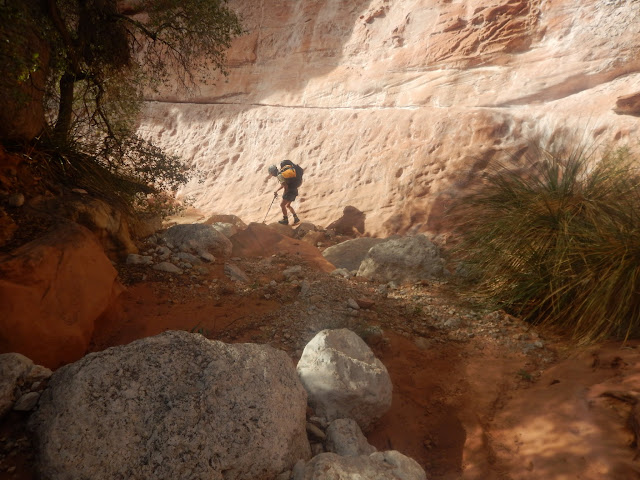
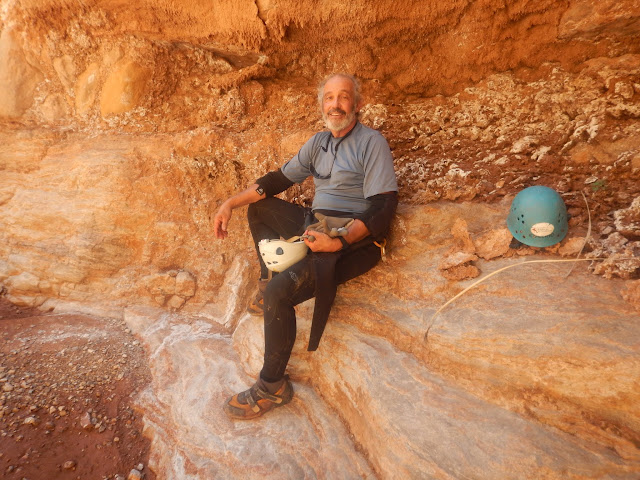
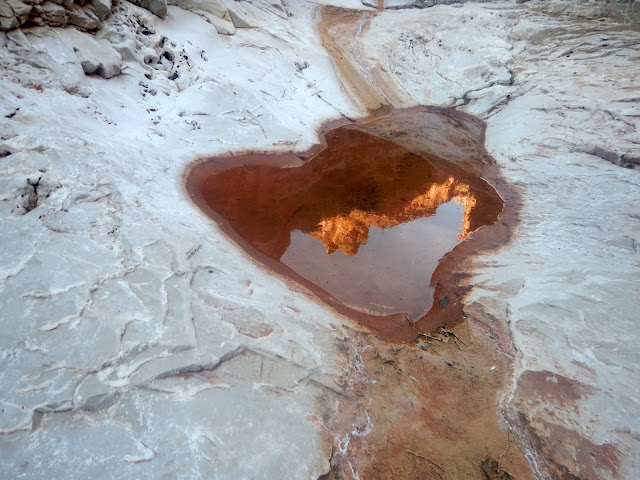
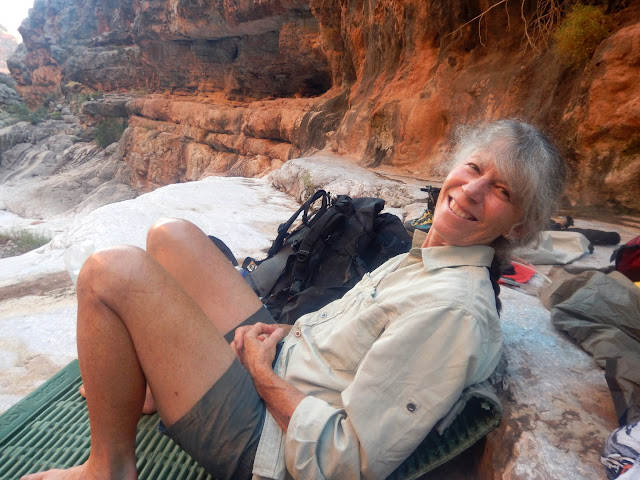
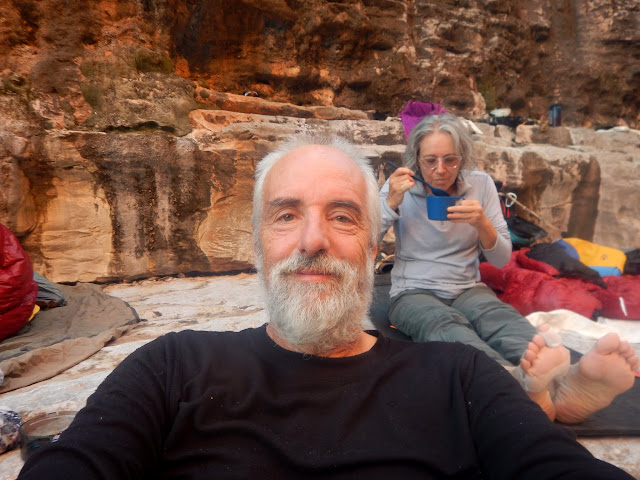
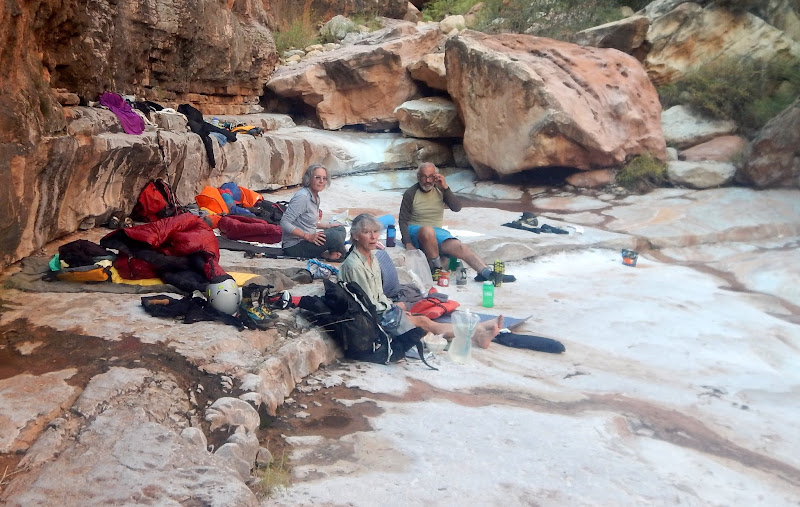
Jean had never been to the Grand. For Harvey, something meaningful is always required. Jenny thought Cove a great choice. I concurred. Planned it for 5 days to let it all soak in. It took six, as we set a record for slowest descent, as storms cut some hiking days short. The group of 4 was 250 years old. I was the baby at 60, so I hauled the rope down the canyon and on the way up and out. MEOW! We zipped packs almost exclusively, (15 raps?) which burned time, but was low stress. Jenny ran the anchoring with style. Campsites in canyon were lovely.The float down the river, to the top of lava, was a highlight. The drive out, post rain storms was….interesting…..as Jenny made it through the lake that passed as a road.
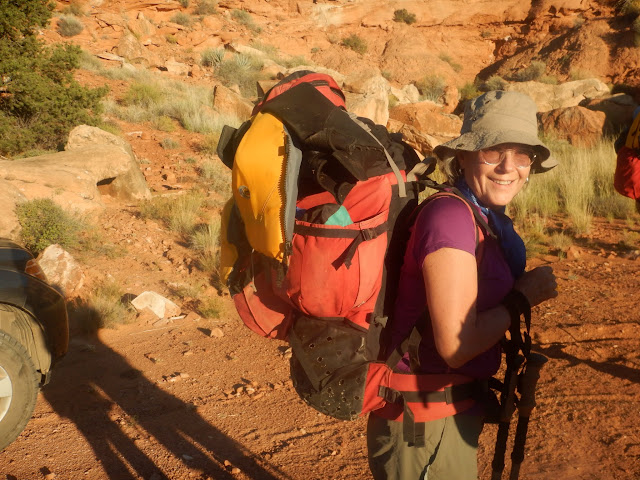
big packs
Jenny camps on the edge
Gear explosion
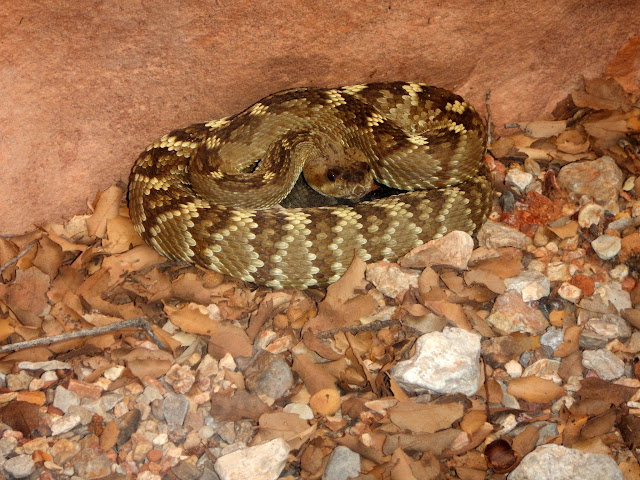
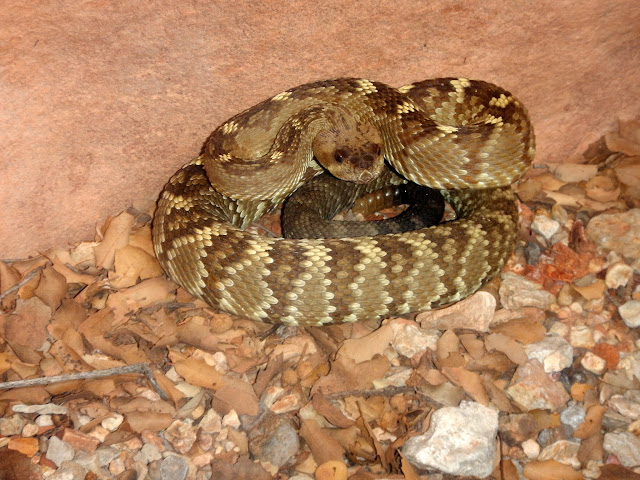
hey buddy
yeah, you!
back up
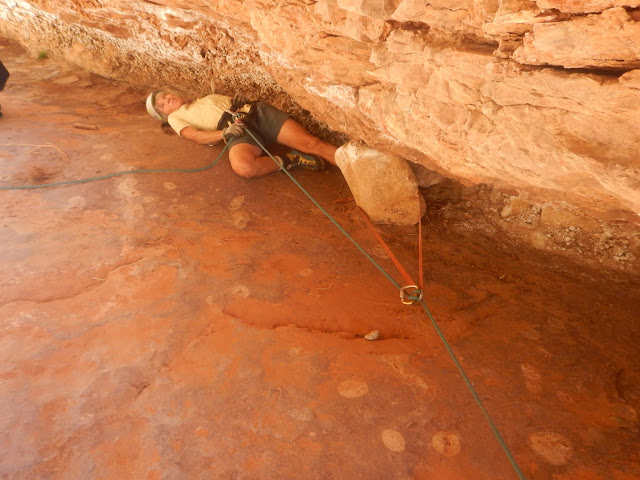
Kng of the Canyoneers
Happy at the ledge camp
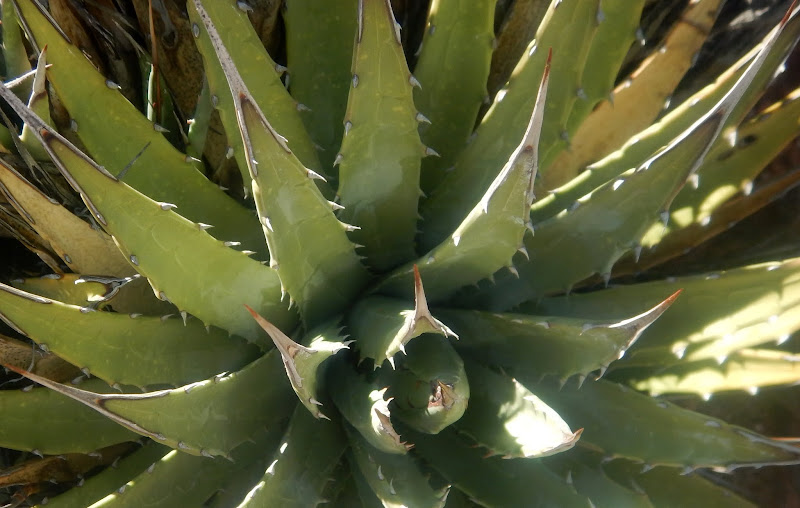
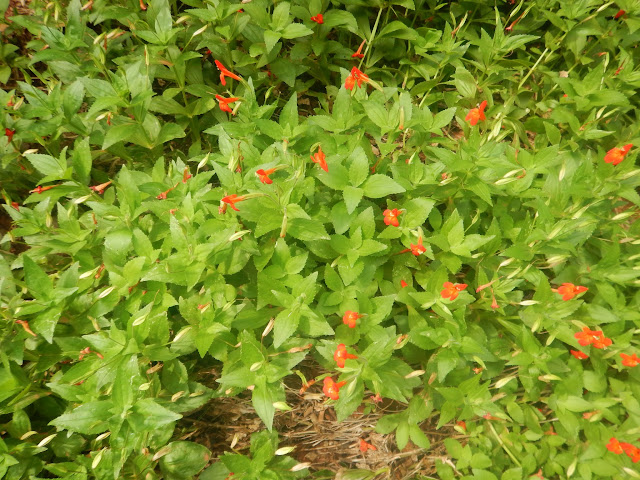
What is it?
Rewall narrows
redbud pod opened
rain
A commercial trip down Lava
Up the hill

Mike Rogers
NICE!!
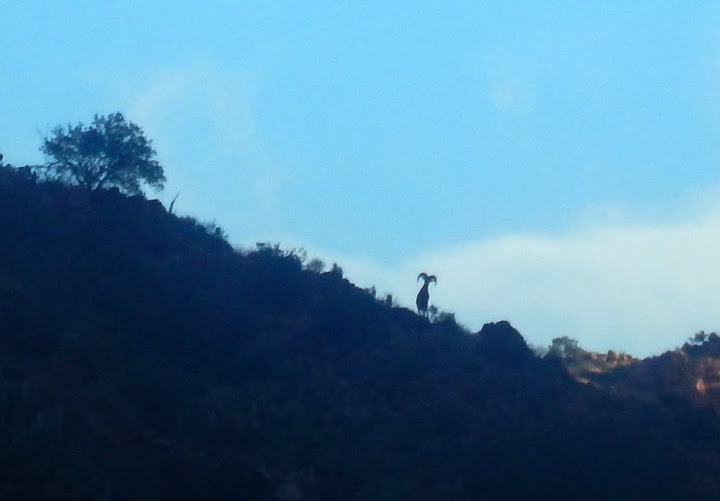
Ram
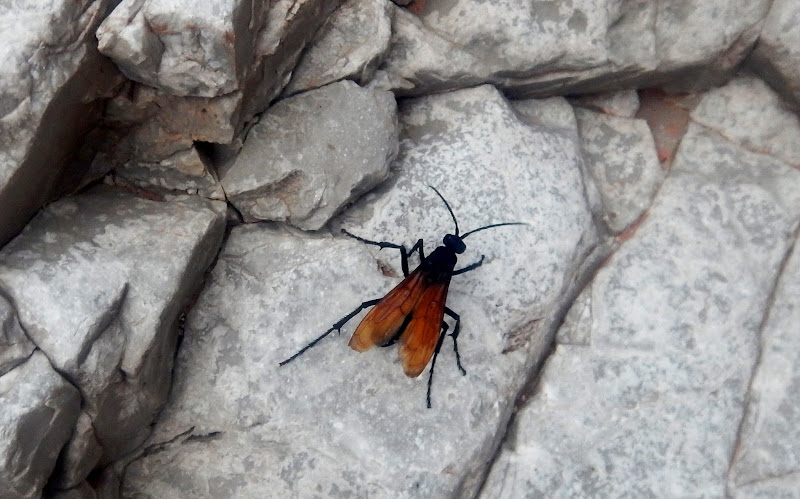
I asked in the caption for this picture, what type bug this was and Hank answered me in private. I think it interesting enough to share the info here
https://en.wikipedia.org/wiki/Tarantula_hawk
Tarantula hawk
From Wikipedia, the free encyclopedia
For the psychedelic rock band, see Tarantula Hawk (band).
Tarantula hawk
Scientific classification
Kingdom: Animalia
Phylum: Arthropoda
Class: Insecta
Order: Hymenoptera
Suborder: Apocrita
Superfamily: Vespoidea
Family: Pompilidae
Subfamily: Pepsinae
Tribe: Pepsini
Genera
Pepsis
Hemipepsis
A tarantula hawk is a spider wasp which hunts tarantulas. Tarantula hawks belong to any of the many species in the genera Pepsis and Hemipepsis in the family Pompilidae (spider wasps).
The more familiar species are up to 5 cm (2.0 in) long, with blue-black bodies and bright, rust-colored wings (other species have black wings with blue highlights), making them among the largest of wasps. The vivid coloration found on the bodies, and especially wings, of these wasps is an aposematism, advertising to potential predators the wasps’ ability to deliver a powerful sting. Their long legs have hooked claws for grappling with their victims. The stinger of a female Pepsis grossa can be up to 7 mm (1⁄4 in) long, and the sting is considered the second most painful insect sting in the world; the most painful being that of the bullet ant.
Contents
1 Behavior
2 Distribution
3 Sting
4 State insect of New Mexico
5 See also
6 References
7 External links
Behavior
This section needs additional citations for verification. Please help improve this article by adding citations to reliable sources. Unsourced material may be challenged and removed. (January 2015)
The female tarantula hawk captures, stings, and paralyzes the spider, then either drags her prey back into her own burrow or transports it to a specially prepared nest, where a single egg is laid on the spider’s abdomen, and the entrance is covered.[1] Sex of the larvae is determined by fertilization; fertilized eggs produce females while unfertilized eggs produce males.[1] When the wasp larva hatches, it creates a small hole in the spider’s abdomen, then enters and feeds voraciously, avoiding vital organs for as long as possible to keep the spider alive.[1] After several weeks, the larva pupates. Finally, the wasp becomes an adult, and emerges from the spider’s abdomen to continue the life cycle. Adult Tarantula wasps are nectarivorous. The consumption of fermented fruit sometimes intoxicates them to the point that flight becomes difficult. While the wasps tend to be most active in daytime summer months, they tend to avoid high temperatures. The male tarantula hawk does not hunt; instead, it feeds off the flowers of milkweeds, western soapberry trees, or mesquite trees (females feed on these same plants, as well).[2] Male tarantula hawks have been observed practicing a behavior called hill-topping, in which they sit atop tall plants and watch for passing females ready to reproduce. Females are not very aggressive, in that they are hesitant to sting, but the sting is extraordinarily painful.
Distribution
Worldwide distribution of tarantula hawks includes areas from India to Southeast Asia, Africa, Australia, and the Americas. Tarantula hawk species have been observed from as far north as Kirkland, Washington in the United States, and south as far as Argentina in South America, with at least 250 species living in South America.[3] Several species of tarantula hawk are found in the deserts of the southwestern United States, with Pepsis grossa (formerly Pepsis formosa)[4] and Pepsis thisbe being common.[citation needed] The two species are difficult to distinguish, but the majority of P. grossa have metallic blue bodies and reddish antennae, which separates them from P. thisbe. Both species have bright orange wings that become transparent near the tip.
Sting
Tarantula hawk wasps are relatively docile and rarely sting without provocation. However, the sting—particularly that of P. grossa—is among the most painful of any insect, though the intense pain only lasts about three minutes.[5] One researcher described the pain as “…immediate, excruciating pain that simply shuts down one’s ability to do anything, except, perhaps, scream. Mental discipline simply does not work in these situations.”[3] In terms of scale, the wasp’s sting is rated near the top of the Schmidt sting pain index, second only to that of the bullet ant, and is described by Schmidt as “blinding, fierce [and] shockingly electric”.[6] Because of their extremely large stingers, very few animals are able to eat them; one of the few animals that can is the roadrunner. Many predatory animals avoid these wasps, and many different insects mimic them, including various other wasps and bees (Müllerian mimics), as well as moths, flies (e.g., mydas flies), and beetles (e.g., Tragidion) (Batesian mimics).
Aside from the possibility of triggering an allergic reaction, the sting is not dangerous and does not require medical attention. Local redness appears in most cases after the pain, and lasts for up to a week.
State insect of New Mexico
The U.S. state of New Mexico chose the tarantula hawk in 1989 to become its official state insect. Its selection was prompted by a group of elementary school children from Edgewood doing research on states that had adopted state insects. They selected three insects as candidates and mailed ballots to all schools for a statewide election. The winner was the tarantula hawk wasp (specifically, P. formosa).[7]
Tarantula hawk wasp
Male tarantula hawk at Grant Ranch county park, near San Jose, California
Tarantula hawk dragging a paralyzed tarantula
T-Hawk stinger
T-Hawk blue-black body
joeb
Cove is a fun one! Great pictures. Did you get lucky and have a reasonable temperature on the hike out? Noticed the river was running brown – what did you use to filter it? We had a terrible time getting the water clean when we had to deal with that silt.
ratagonia
Like many Grand Canyon adventures, it is prudent to water-up at the last good water in the canyon, and carry water from there.
Tom
Ram
For the hike out of Lava, we had planned a crack of daylight start, but that proved both unnecessary and impractical. We had 6 storm cells come through the night before, 2 of them with a lot of thunder and lightening and torrential downpours. The mid actually had water come through the fabric, which is quite rare in my experience. We also had a storm cell come through as we packed up in the AM. I don’t think we were hiking till after 9 AM. The real downside was for those that did not secure their gear overnight. Their heavy packs were now considerably heavier.
We had a nice breeze coming out and it was partly cloudy, which also offered relief. The saturated soil gave mostly better footing EXCEPT where it didn’t. A steep section or two of beige baby poop soil was encountered just below the surface a quarter of the way up and calling that treacherous would be appropriate.
As for the water, we floated down the river with full dromedaries, from the bottom of Cove. When we finally ran out of the clear water, we refilled a dromedary or two from the shallow part of the river and hung it from a tree overnight. The silt settled and provided pretty clear and tasty water for us. Apparently, not all brown water is equally impregnated with silt. Neither Jenny nor I treated water during the 6 day trip (YMMV).
Kuenn
Beautiful! What fun!
Especially like the first pic. Magnificent exposure, but where’s the rope?
And the last pic. One of those, “Yes, I’m talking to you!” warnings. Five minutes from the top. Just goes to show – It ain’t over until it’s over.
Kevin
Awesomeness! Great pictures, looks like you guys and gals had a fun time. Need to get out with you, it’s been a while.