A long report on a longer fall in Deadeye Dick
On May 13, I started a planned solo descent of Deadeye Dick canyon, on BLM land outside of Zion Park. Technical soloing is not something I actively seek out, but the tyranny of “The List” won out, and at the time, the canyon seemed the least problematic of the Zion-area canyons I had wanted to do. That said, the canyon fails my normal solo filters in having a drop higher than my arbitrary cutoff of 100′. This ended up being a case of desire over-riding better judgement.
The hike in was pretty deserted due to the Narrows closure, and I quickly reached the access canyon, soon finding that its first upclimb was running with a small flow of water. I located an alternate route to bypass the short narrows and soon fond my way into the Deadeye Dick drainage, again finding a small stream running through the canyon. This was somewhat unexpected, as I had not brought a wetsuit, but I decided to continue due to the small flow, minimal implied water-holding capacity of the canyon, and faith in my cold water tolerance. This turned out to be a critical mistake, as it represented the type of changing condition that would normally will end a solo trip. At the first rappel, a small, chest deep, pool had formed. I went into toss-and-go mode and started down-canyon.
There is a certain flow to things when a solo trip is working the way it should, but for some reason, I didn’t feel quite “on point” while I was moving . Rope tosses ended up tangled, and the bright sunlight created an environment where I couldn’t see the full length of the drops. I went into conservative mode, using the double rope approach with the knowledge that a 120′ drop occurred in the canyon. After the second rap down the beautiful, tight flute, the canyon opened, and I had the chance to reconsider. At the base of rap 2, I had a short swim in cold, clear water. Not enough to cause issues, but it got my attention. Did I bail where the canyon opened? No.
More wading was followed by the boulder drops, and I quickly reached the short drop into the deeper narrows. At this point, a bright, thick (10mm?) rope extended around the corner to the rappel down the groove. I had seen fresh canyoneer prints on the walk-in, and assumed that the party must be just ahead. I yelled, and thought I heard a faint response, the rope feeling tensioned, as if someone was still on. I waited-nothing happened, and the cool, shady environs began to take hold. I soon formulated a plan, got on the rope, and resumed rappelling on the big rope with the plan to do a little clean-up of the obviously stuck line. At the base of the groove, the rope ends floated in a longer swimmer. I quickly abandoned the plan to pull the rope as I was starting to get quite cold. A short walk away was rap 6, the last, and longest rap in the canyon.
The anchor at R6 is a slung log, requiring a lower onto the anchor, with one’s ass hanging out over the drop. A small ledge occurs just below the log, allowing for a not very secure stance to lower onto the anchor. I quickly threw a rapide onto the webbing (checked for condition and knot), threaded my tied and measured ropes through, and pulled through as close to the rapide as possible. A careful mantle down onto the anchor, the SQWRL set in a high friction configuration, and…
I had two thoughts over the next few seconds. The first was bemusement at why the anchor was receding so fast. The second, farther down and where I had stopped bouncing off the walls, was that the impact was going to kill me. My wife’s face flashed through my mind, then, impact. Not on rocky ground, shattering my body, but pack-first into a deep pool. A second later, I recognized self-awareness and the need to breathe. A frantic swim, gasping, and a recognition that I had somehow survived a drop that 99% of the time would kill people outright. I scrambled up onto the edge of the pool, expecting to find major injuries, but quickly found that I was walking. Over and over, “I have to get out of here” cascaded from my mouth. I grabbed the remains of the rappel strand, cut near the device, and hurried out. Soon after emerging in sunlight by the North Fork, I ran into a party of packrafters headed downstream, including one with WFR cert. An assessment followed, and I guess I seemed sound enough to continue upstream. I just wanted to get away from the canyon.
After meeting my “responsible aware party” in Springdale, I stayed at a friends place for the night (thanks again, Tom). The following day, a trip to the clinic was quickly followed by a trip to the Trauma center at the nearby hospital. In the end, I walked away with one broken rib, a strained groin, and a lot of scrapes and bruises. My wife is of the opinion that my legs, built from a lifetime of obsessive hiking, mountaineering, and canyoneering, would have received compound fractures of the long bones, had they been much smaller. The emergency room doctor finished his examinations with the statement “go buy a lottery ticket”. Sometimes, it’s good to be (extremely) lucky.
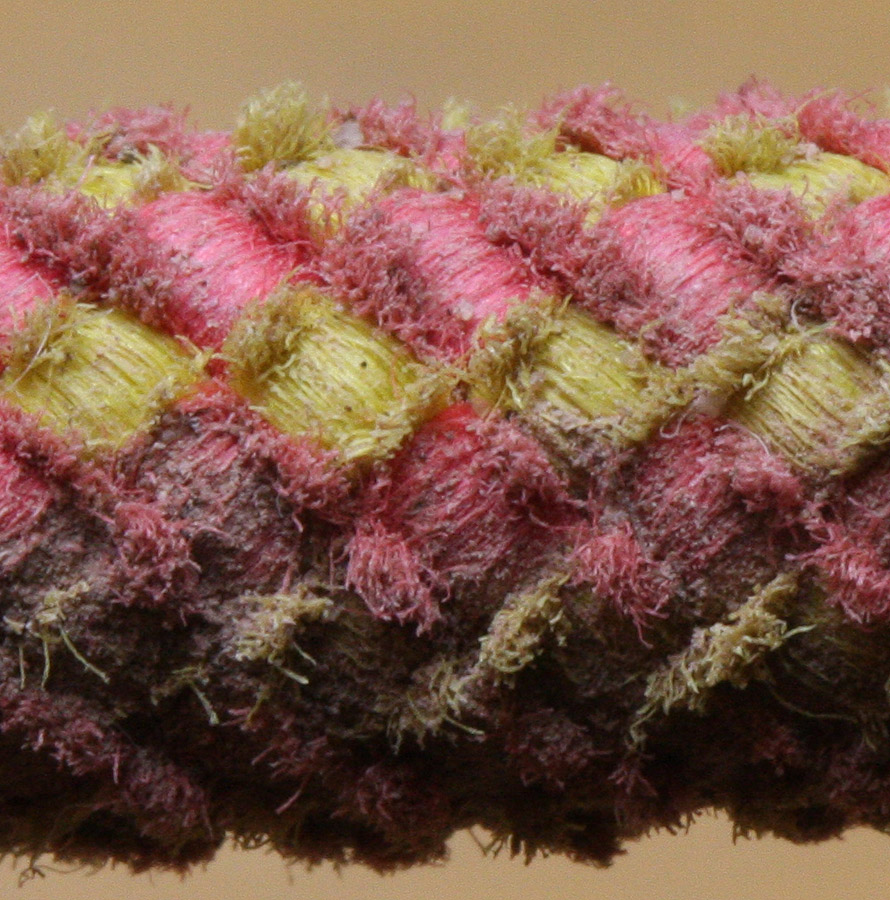
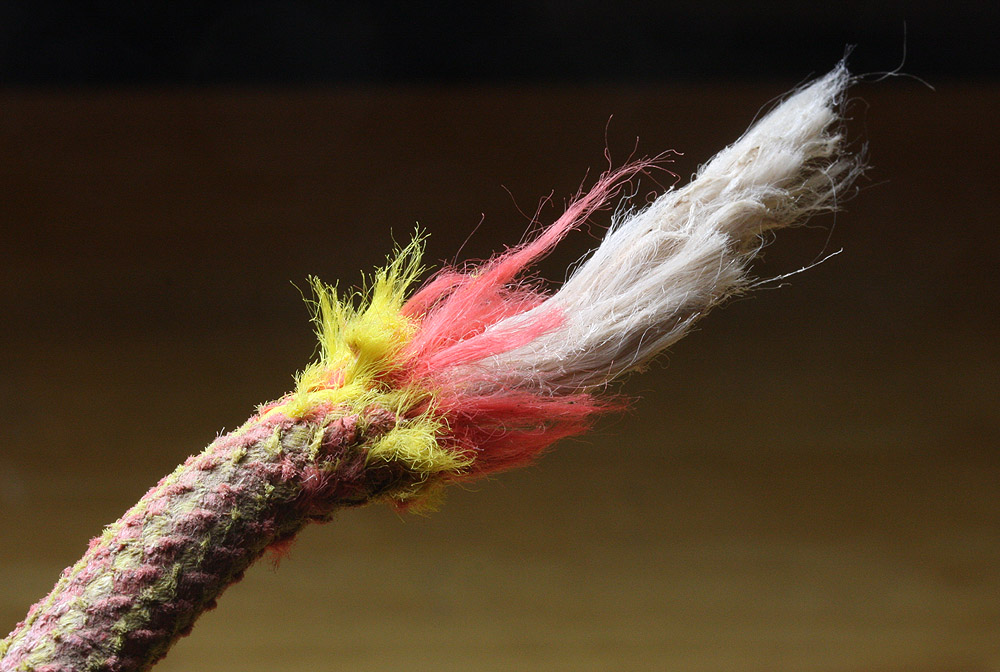
Looking back at what happened at the anchor provided no obvious answers, only distinct possibilities. The rope appears to have cut on something, and my best assessment is that my rope, which was in a high friction configuration on my SQWRL, ran over the edge in a fashion that the rock cut through the sheath and exposed the core, which in turn was at least partly cut. The rope was an older canyon fire 8.3 mm, and was due for retirement. A few recent trips included exposure to water that may have been highly astringent, and I did not clean the rope after my previous trip. No sharp edges were identified on the SQWRL or the anchor log. Dynamic loading (essentially simulating a Factor 2 fall) was also considered. Ultimately, the best approach at the anchor should have involved me clipping in with my PAS, allowing for a more relaxed assessment of the anchor and the start of the rappel. Due to my coldness, I shortcut a critical safety step, and the result could have been catastrophic.
Not a comforting thing to carry back to my family and friends.
John Styrnol
Not to take away from this thread, but let’s not forget about that volunteer ranger in Pine Creek on the last rap, a few years back.
Yellow Dart
@Chris Hood
How long did the adrenaline rush last?
I’ve had some aggressive spikes in my days, but nothing close to a 90′ accident… my leg would probably still be shaking.
Chris Walden
Whoa glad you are ok
Tirrus
Chris, glad you are still with us!
Is there any possibility the sharp edge which can develop on the SQWUREL could have been the culprit?
Talked about in this thread:
http://canyoncollective.com/threads/sqwurel-concern.21851/
Bill
So scary.
Im glad to hear you made it out with relative minor injuries @Chris Hood
qedcook
How long was this fall?
ratagonia
About 90 feet.
T
Stevee B
Fuuuuuuuuuuuu&*%!
2065toyota
We were there in November and my 106′ rope was off the ground. Had to climb out of a deep hole of mud and dirt
ratagonia
Sure glad it forms that deep hole, or we would be having a different discussion.
T
Kevin
Glad you are okay and still with us Chris.
John Styrnol
Glad to hear you are ok Chris.
EvergreenDean
Wow, I am in shock Chris! Unbelievable that you survived this. We can’t be losing any more folks. I’m very glad you got so lucky. I am going to clean and inspect all of my ropes today…or when it stops raining/snowing here.
Brian in SLC
A long sliding fall across a sharpish rock edge might do the trick…
ratagonia
Here’s a thought – is it possible that the rope where it exits the sqwurel squeegied over the somewhat sharp edge, thus squeezing the rope between the sqwurel and the edge, under tension?
Even well-used and ready for retirement, the rope simply cutting when hitting the edge seems unlikely.
Tom
ratagonia
Pictures…
A well-used rope ->
Cut rope end ==>
Brian in SLC
Whoa…YIKES!
Glad you’re still amongst the living!
Well told. Be interesting to hear your further thoughts on what happened.
Whew…(and, nice description of the splash down)…
LonePeak
Thanks for sharing. I wish you a rapid recovery. It sounds like among the lessons for us to learn here are: protect edges, retire rope, clip in, inspect anchors and rappel setup, use courtesy anchors or hand lines to lower oneself down to the proper rappel start below the anchor, plan time to spare, stay in shape, and be well equipped with warm gear, a sam splint, super glue, athletic tape, and manpower.
Dan Ransom
Damn dude. Stoked you are going to be ok, and thanks for sharing.