A new book about canyoneering in Moab recently came out, and within its covers I found beta for SGR Canyon. Only two canyons in that book had a 5/5 star rating: Pleiades and SGR. I had done Pleiades before and LOVED it! Since this “new” canyon had a similar “star rating” as the favorite Pleiades canyon it made my “short” list, and I decided to make the trip happen soon!
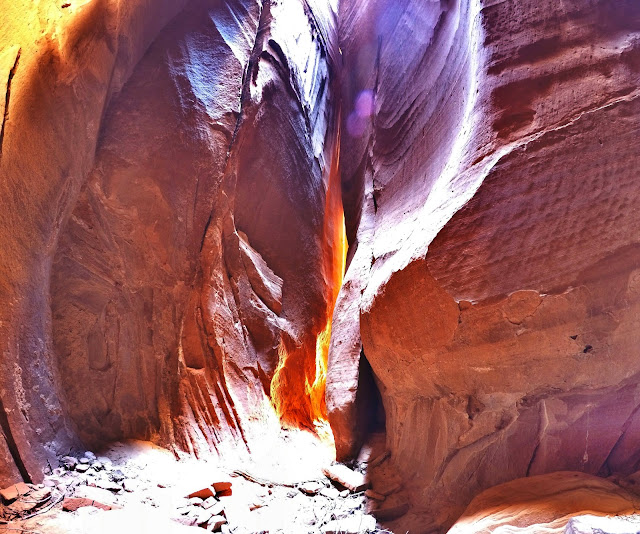
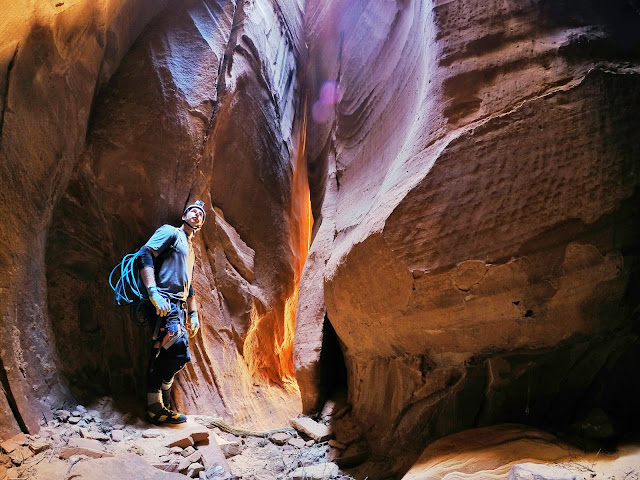
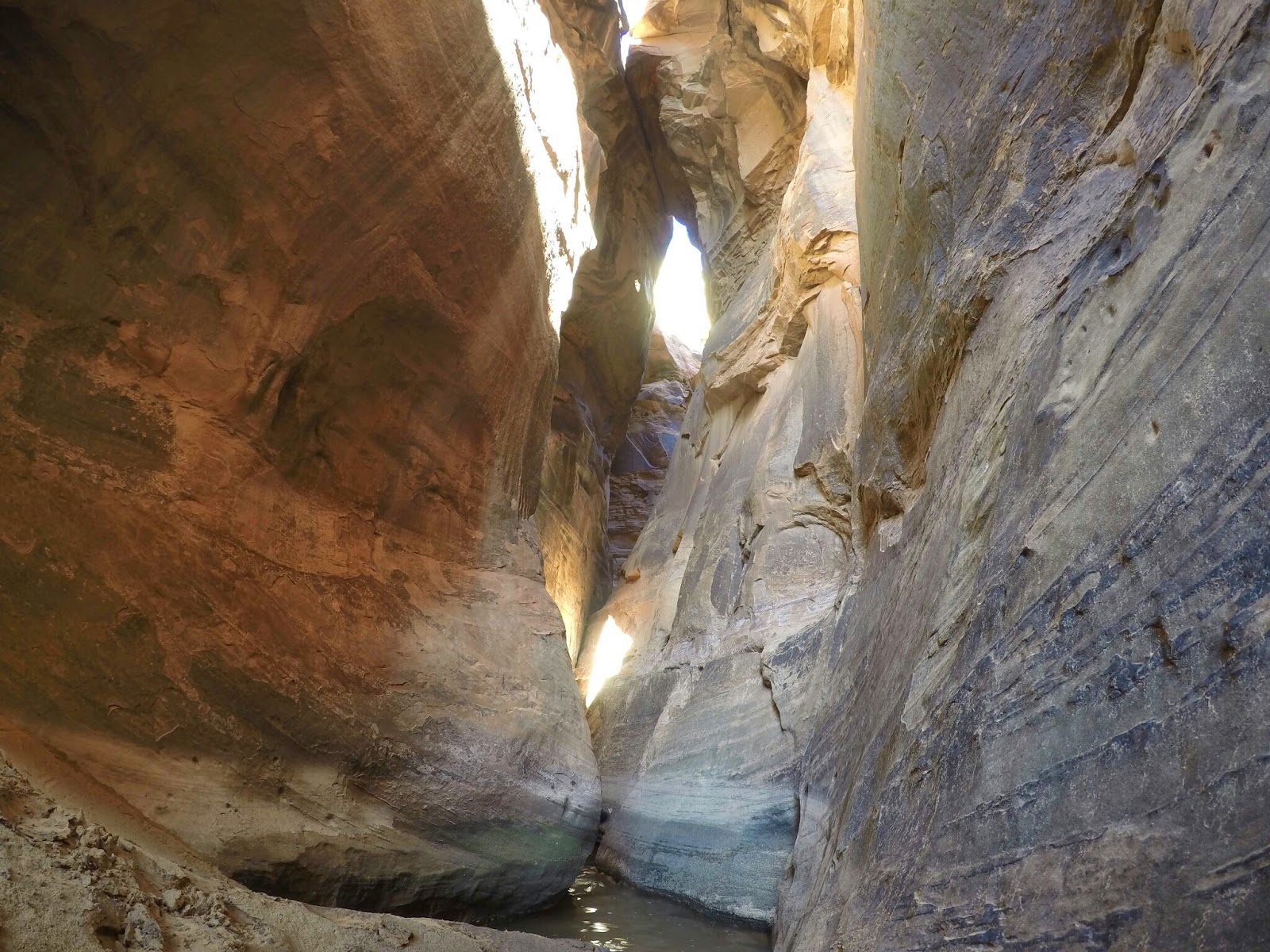
I really enjoy canyoneering in Moab. Yes, I know, most of the slot canyons near moab can hardly be called “slot” canyons, but, what they lack in “slotiness” they make up in providing great fun and breathtaking scenery! SGR was wonderful canyon. As I sit here and ponder upon my trip I get goosebumps thinking about all that I saw and experienced on this trip. It was a good one!
Full TH can be found here
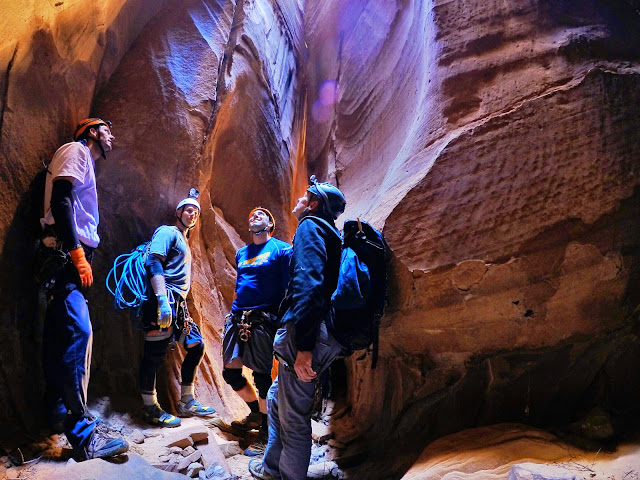
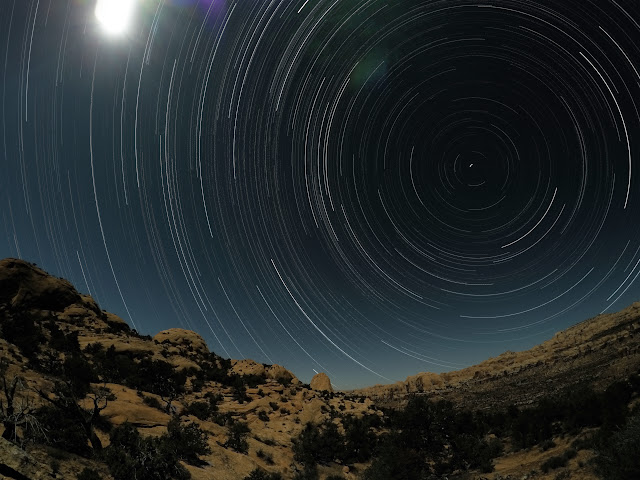
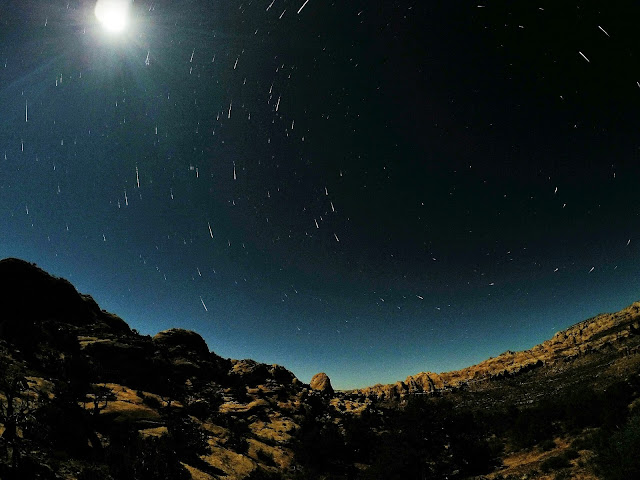
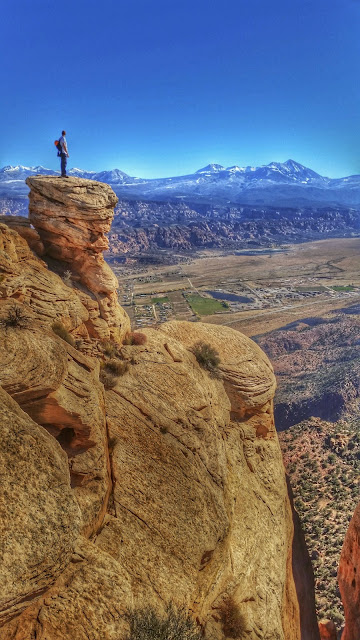
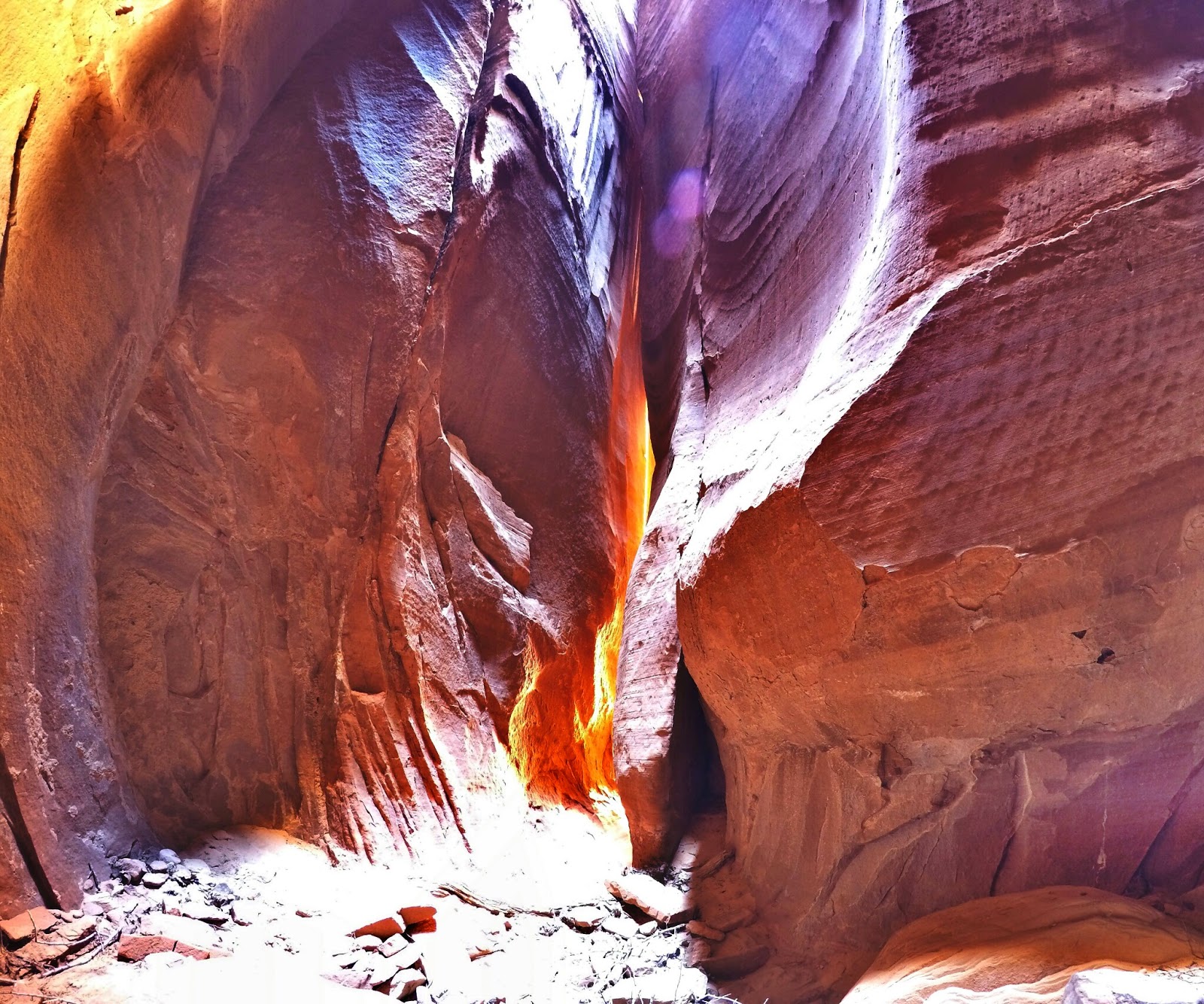
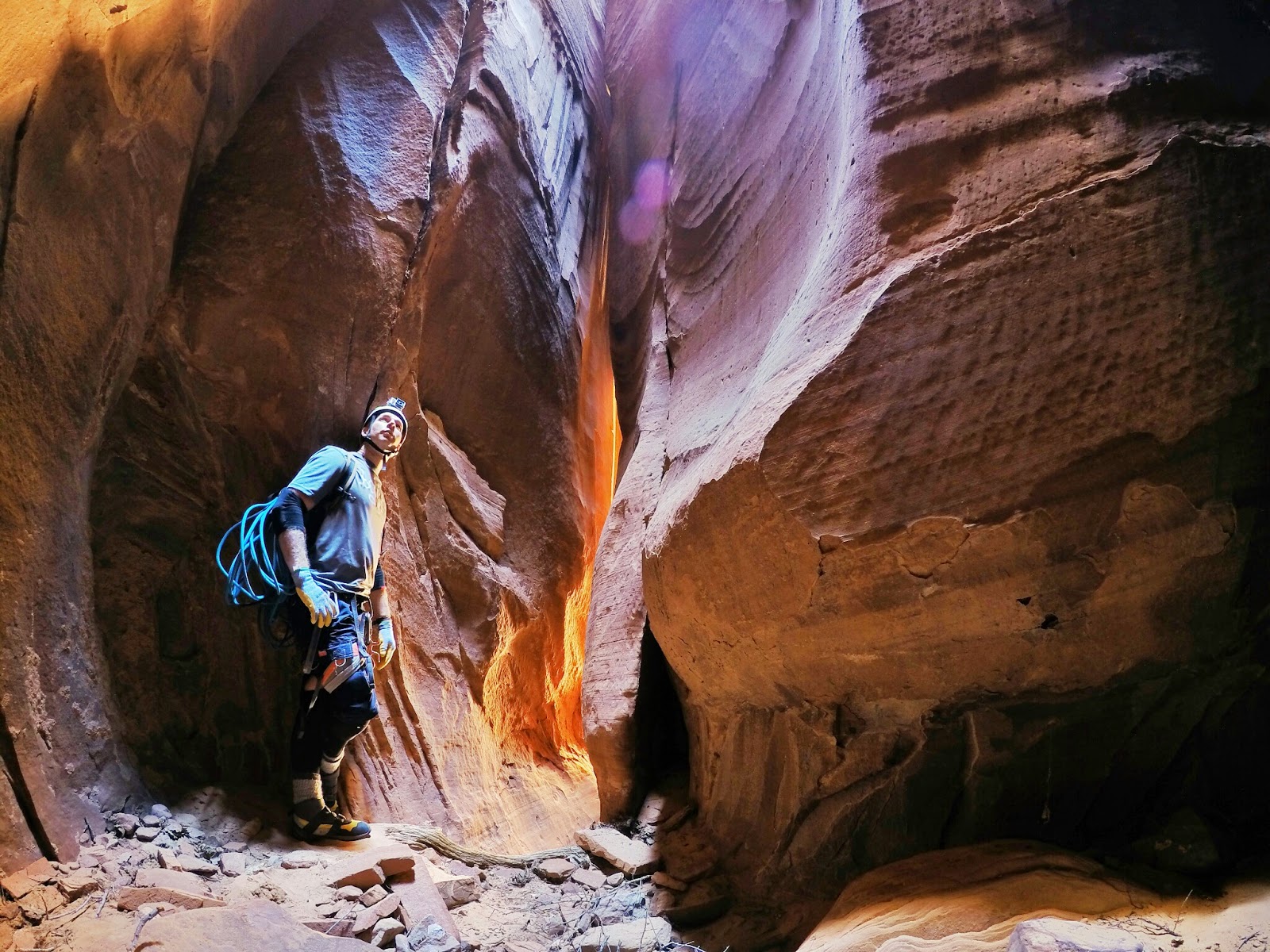
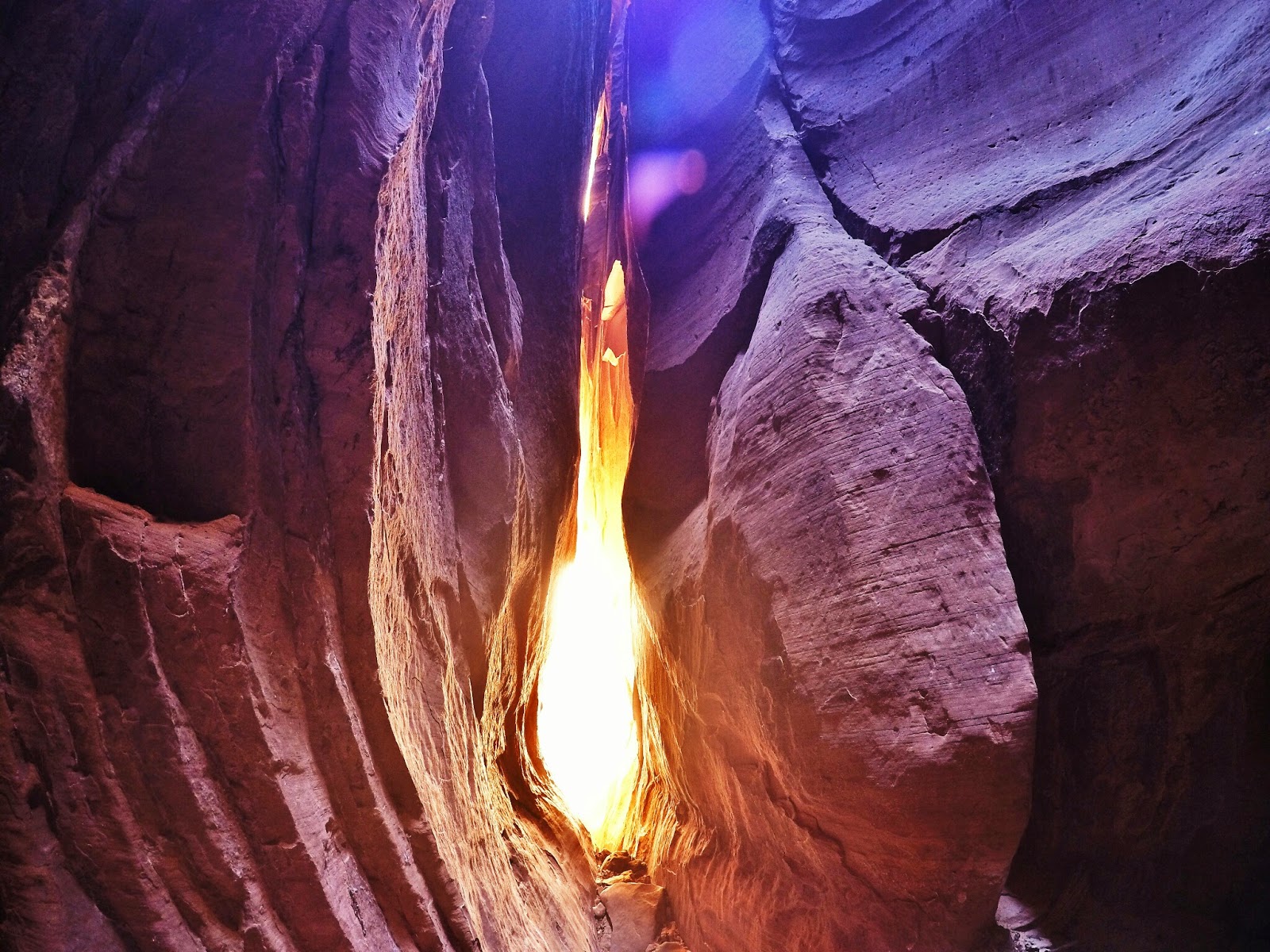
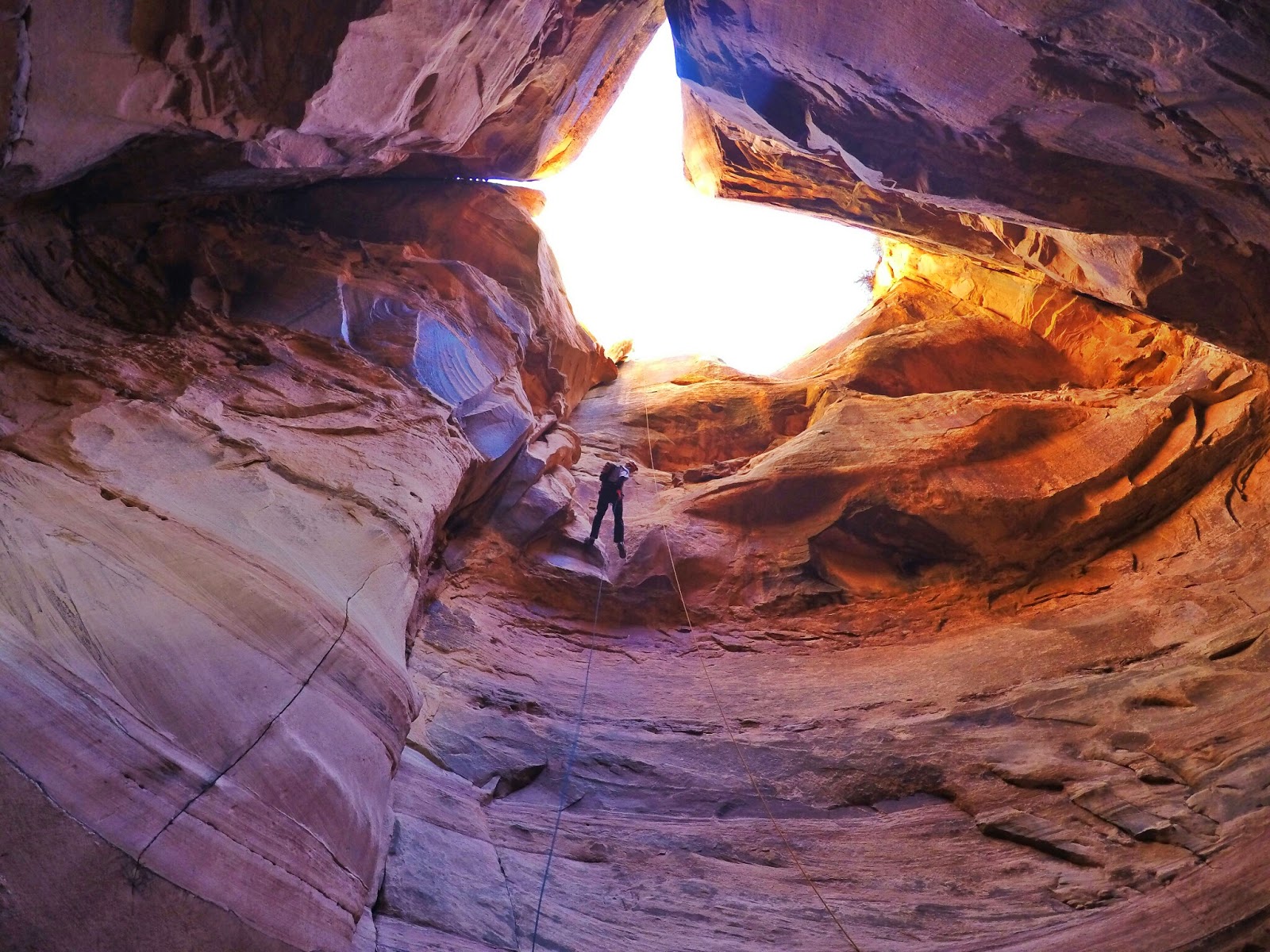
Bootboy
I’ve always thought that a climbing rating should be used in the case of most R and especially x canyons when exposure/stemming are the special consideration in question.
As a climber, it would help give me a much better idea of what I’d be getting into.
Ram
I had always felt that one could add a climbing number to the end of the rating when needed. That it is kind of build into the system when necessary. I would usually look something like this…..3B III R 5.6. A section of slot can be 3rd class down and 5.11 up the same spot. I will use Yosemite Rating System, added on, when the R or X section has special 5th class climbing, usually upclimbs. In sustained stemming, perhaps longer than this canyon, perhaps not, I call the movement “lateral chimney.” It is almost all horizontal and it always seems to require many low 5th class moves. That is so often the experience, as to not need mention. I always thought R’s or X’s that had those rating for reasons other than stemming, were the places that needed words, in particular, to clarify why they got those ratings, sans stemming. YMMV
R
R Marsters
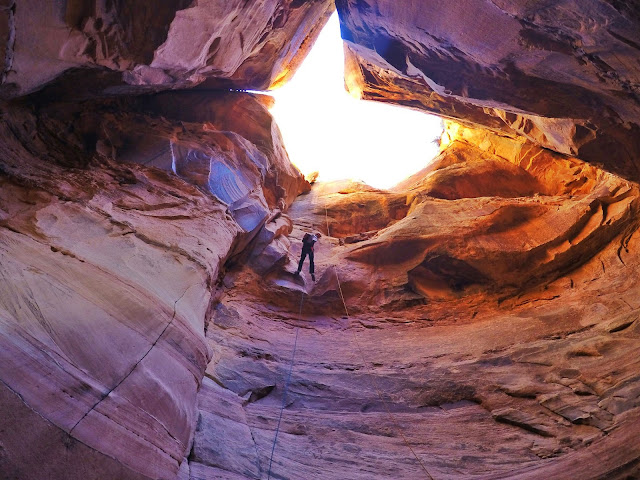
Blake – those rap shots are quite nice.
Tom – I’m the “Ryan” wandering around Giles’ and Julie’s camp the other night – thanks for loaning our group the pull cord for Twin Brothers!
I’d put the SGR stemming at the top of the penalty list for the canyons I’ve done. The descending move just before the ledge was the spiciest for me (5’6″ carrying a couple packs), but again, the stemming isn’t too difficult (back to feet at the widest for me). There’s a solid vertical pillar/pocket just below the bush that is fairly easy to get to and sling if for some reason somebody is unable to climb up.
Using roadtripryan’s ratings, I’d rate the consequences of a fall and the no-fall duration of SGR significantly higher than these R-rated canyons:
-Burr Slot (a couple ledge-y silos with consequence and stemming without much consequence since it narrowed just below).
-Middle Leprechaun (I don’t remember any high stemming or silos, just a lot of swearing and grunting).
-Chambers
-Inferno (single silo?)
Again, this assumes the R/X rating considers only the consequences of a fall and not the technical difficulty as in climbing, though none of those were technically difficult. Does it include difficulty? That seems rather cumbersome and confusing. I think I have done a couple canyons Kelsey rates as X-. SGR had higher consequences. That being said, there are a few pics in Kelsey’s book of mossy X rated canyons that appear significantly more dangerous.
gajslk
Agreed. Dangerous, too. Climbing-style ratings give a much better picture of the problem. 5.3X? No sweat. 5.13X? No way. Saying that a canyon has to be above a certain difficulty level to be considered R or X smacks of elitism … and it can get someone killed. Is a little ego stroking worth that?
Gordon
ratagonia
Sorry guys, no. That is not the way the SLOT ratings has evolved out in the field.
The SLOT ratings are based on a combination of difficulty and dangerousness. It would be nice if the two could be separated (E2 5c?) but that is not what has happened. https://www.thebmc.co.uk/a-brief-explanation-of-uk-traditional-climbing-grades
The Angel’s Landing Trail – 1A X? People die every year on this ‘hike’ – it has tremendous exposure. Close your eyes and hop to the side and you die in many places. Yet we don’t consider it an X.
So there will be canyons that are VERY high, but the moves are straight forward and not too hard. Sounds like SGR is one of them. Haven’t done it, but… just being VERY high does not send it into the R or X range, though I like Mr. Wolfe’s reasoning, because it is hard and dangerous for the area.
Another example is Hog 3 aka Razorback. There is a VERY high, scary downclimb – very intimidating – but the rock is highly featured, and the moves themselves are not so difficult. How hard is that? I call it R-minus. I believe someone on here recently called it X. (oops – Hogtastic Hogfest – called it an R ) And some people rappel this, which brings the difficulty of the canyon down a LOT. I downclimb it sometimes, and rappel it sometimes – depends on if I am feeling it.
There are canyons with hard moves that have almost no exposure. Trail comes to mind – the climb up at the end is fairly hard (used to be 5.9ish – seems easier now (holds have broken, getting easier)). But there is very little feeling of falling a long way, since the hardest moves are close to the ground. That climb-up in Chambers is like that too – and both have the benefit that those who struggle with them can be assisted from below or perhaps from above. (Hard to rate these. Rate them Rminus, and people say ‘easy for that’ – rate them PG plus and people who are up for PG go in and have a hard time).
There’s other complications too. Sandthrax, besides the crux, has only a few moves that would be X (even Xminus) by themselves; however, there is so MUCH sports action in there that Xminus is the appropriate rating, plus the crux up-climb (5.11 or C2 5.10?).
TO BE CLEAR – remember that the purpose of the ratings is to help people get into the canyons that are appropriate for their skill level and preference. The backfire on rating SGR slot an R (if it is not) is that people who do it and think they are now up for doing Rs will perhaps not have a good time when they go do a REAL R canyon.
Tom
gajslk
I know. It’s too bad. Someone is going to die because of it …
That’s right. And that’s why the canyon rating system is an epic fail – it’s scoring two different things with one rating. That only works if everyone has the same climbing skill. Since they don’t, and never will, you attempt to normalize it by assuming some skill level. Let’s say you pick 5.9. That means if you climb 5.9, R=R and X=X. But if you climb 5.12, X might equal PG and if you climb 5.7, R is going to be X … etc. It’s a freaking mess. Yes, the single rating is traditional. So what? Lots of traditional things changed over the years in climbing as people realized that tradition wasn’t working very well …
Gordon
Kuenn
Nice report, Blake!
My daughter got me this guide book for Christmas…already wrapped or I’d be digging into it now. My first introduction to canyoneering began in Moab. Yes, it is atypical of most slot canyons I’ve been to now, but it still holds a special place in the chronicles of time. Thanks for sharing a reason to go back there!
Ram
Thank you for the explanation on the rating. It is tricky business. You don’t want anyone to get sucked in where they have trouble. On the other hand if the rating is at all inflated, those folks may overestimate their ability to do other routes with the same rating that are harder, in the future. A difficult and important responsibility.
Your reasoning in comparing it to other slots both harder and easier is a good angle to approach it from. Also explaining why you made it R+ vs. R was well reasoned. I would love to hear what canyons of the R’s you have done that are comparable and a tad easier and harder. It is all so interesting…to me anyway.
Final question. If a future canyoneer goes to the canyon, gets into the stemming, gets to the silo and it isn’t right for them, can they stem back and escape the canyon out any side before hitting the bottom of the rap before the stemming section? Just wondering on “escape ability”. Committed or not? Fun stuff. Thanks.
Scott Patterson
I’d be interested to hear what the name SRG means, and about the history of the canyon and how it was found.
Furthermore
Blake – Sweet photos and report; I’m glad you enjoyed the canyon.
Perhaps I’ll shed some light on the “R+” rating for those who might be curious on how I arrived at my consensus.
First off, Moab generally has “mellow” or “easy” canyons which is attractive to beginners. With that in mind, I would hate to sandbag some newer folks into a high consequence situation. I would rather be conservative on the rating rather than imply an “easy, safe romp.”
In the book, I defined the R rating as “One or more sections of canyon will have high level of risk. Serious injury or death can occur. Sound judgment and solid technical skills are required.”
The R+ rated section of canyon starts with a silo crossing. That silo is 80 feet deep (I’ve rappelled to the bottom). Although easy to cross, I’m pretty sure serious injury or death (if not certain death) will occur if one was to fall into that silo.
The stemming continues for another 80-100 feet beyond the silo which probably varies between 80-100 feet from the bottom. Just after the stemming, a ledge is reached where the rappel into the second silo is located. The stemming is easy and in terms of length, short. I wouldn’t be surprised if some folks would argue just R.
If the anchor needs to be replaced, I gave that an X rating since a climb out of the slot is required. My background comes from climbing and caving and since that is a climb, I gave that a climbing rating. In climbing, X is defined as “extremely runout, where a fall at the wrong place will likely result in death.”
There is no protection on the slaby face moves to exit the slot so if one were to fall, I believe a fall would likely result in death (5.6 X). Also, the rock quality isn’t great. That X rating should not be accounted for in difficulty. If a climb is 5.2 X, then that climb is runout and a fall will likely result in death. Same risk as say, a 5.10c X climb but clearly the 5.10c is harder.
There is a mantle near the bush anchor which I haven’t tried. That mantle move might be easier but has a higher consequence fall (I would still guess in the 5.6 range).
The climbing partners (not much into canyoneering) I have taken through the canyon both felt it should have been X rated due to the risk. Since canyon difficulty somehow applies to the R/X factor, I gave that section R+ more for the “ouch factor” vs “hard factor.” Again, the stemming isn’t difficult but if one were to blow a move, it would hurt, really bad.
Compared to other R rated canyons I have done, I felt the risk factor was also higher but on the flip side, I also felt the stemming was easier than some other R rated canyons.
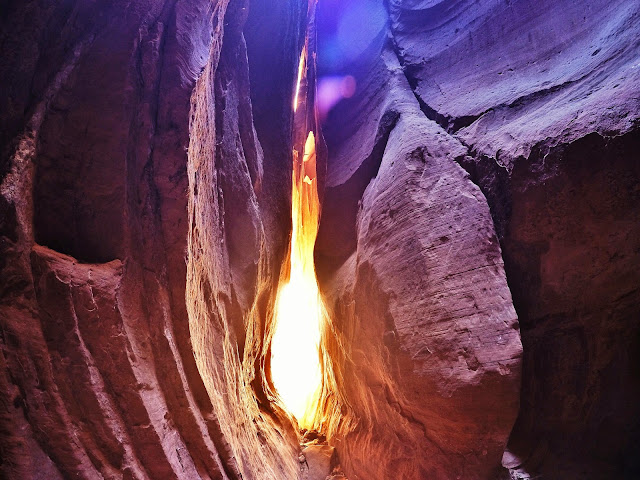
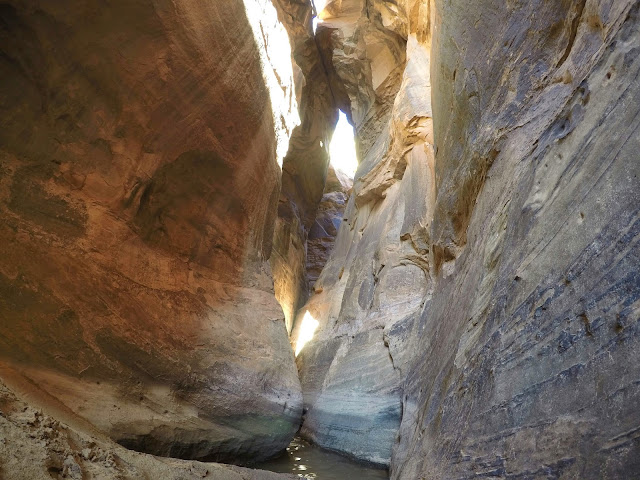
Here is a photo of the stemming section (same one in the book for those who don’t have it). The climb to reach the anchor is up the face on the right just beyond the canyoneer.
First silo.
Stemming section.
More of the stemming section.
ratagonia
Excellent explanation of the difficulties involved in rating a canyon. Thanks Derek.
Tom
Blake Merrell
ROFL! OH, those blessed cows haha
Blake Merrell
Dang! Missed meeting you by a day.
I’ll try and post some screen shots of the video I took if the stemming. The video kind of shows what the R section looks like.
Ram
Dang is right! I would have been there a day earlier if I didn’t have to dodge all those cows!
Ram
I have been told that the rating is R+. That it involves some stemming, then over a silo (the crux?), some more stemming and then a rap down a 2nd silo, the spot with the exposed to get to anchor, right? Is this accurate? Fairly short section? How long? Any pictures of that area or were you too busy ?I don’t know what canyons Mr. Wolfe has done, so I don’t know how to take his rating. Rating are subjective, for sure, but it would be good if enough folks with experience at that rating could comment so that the general public can get a feel for how hard and/or dangerous. Comments?
PS I met Hikster11 at Arches and he talked about this canyon. I told him I had been, but upon review here, it was a different canyon I thought he was referring to. Just wanted to clear that up with him, if he posts or follows this board
PPS Shout out to British Rob. It was a pleasure meeting you, brief as it was.
ratagonia
Awesome!
Mr. Wolfe claims some hard climbing in there. What did you guys think?
Tom
Blake Merrell
The stemming section is pretty high, but it wasn’t to difficult. Ya can’t see the bottom of the slot you are stemming so it doesn’t mess with your head to much. For those that aren’t comfortable with stemming and such, this would be difficult. There is one anchor off a tree in the middle of the slot portion of the canyon, and when that anchor needs to be replaced the climbing move to get up to replace it would be a bit tricky. Easy climb, but huge penalty points if you fall. The drop at that point is about 100′
Deagol
see any cows in there ???
Hahaha, Blake just kidding..
It actually looks very nice.
Blake Merrell
ROFL! Actually, YES! We were woken up by cows that morning. There is a water source for the cows near the TH. dang cows!
It was a good canyon